

THE NATURALIST GRANDEUR
Yarrow Blue
Yarrow Blue
Couldn't load pickup availability
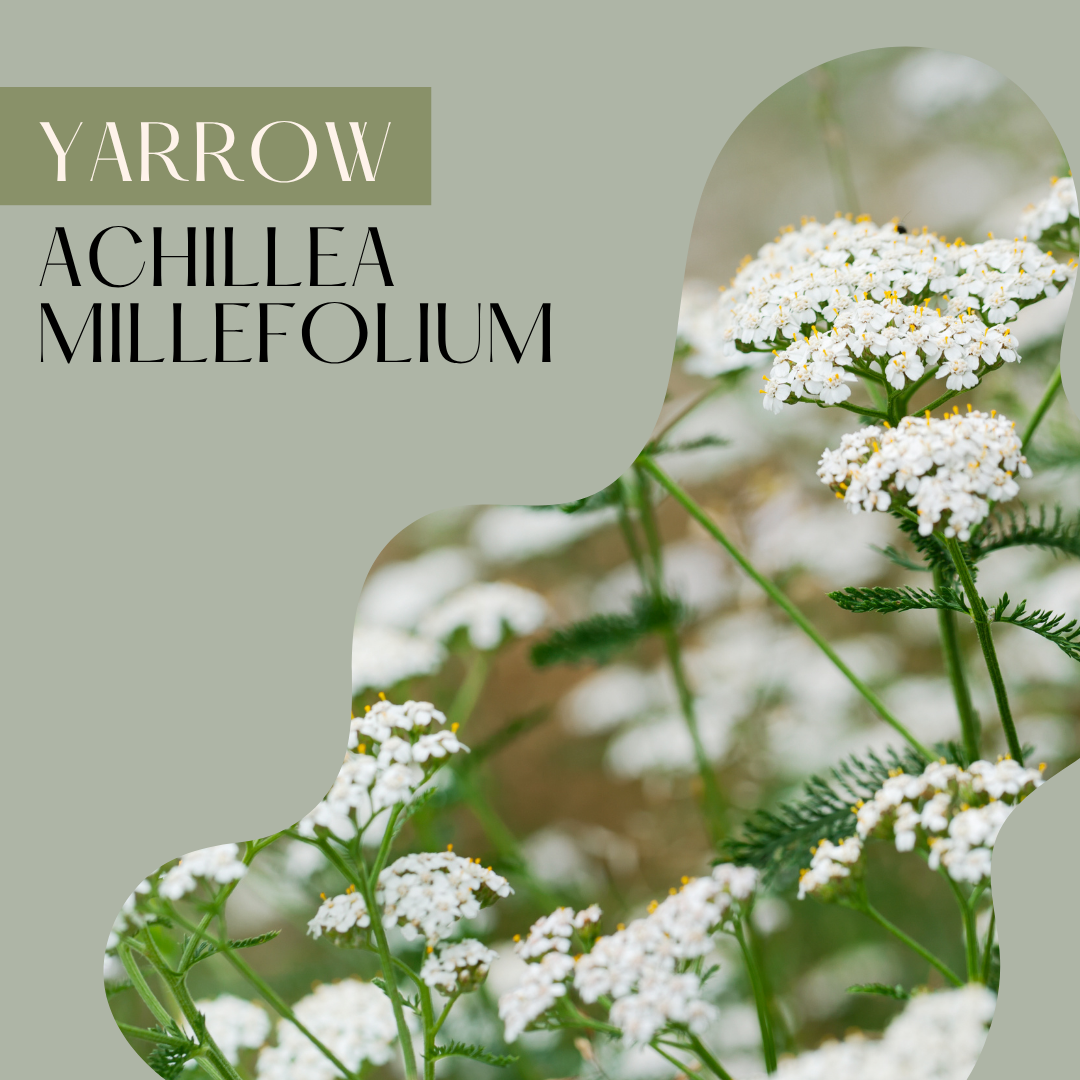
Botanical Name: Achillea millefolium
Botany and Origins: A perennial creeping herb, growing to a height of 10 to 60cm, with lace-like leaves divided into feathery leaflets, and a composite lead of numerous, tiny, daisy-like flowers, white or pink in colour. It grows wild all over Europe, western Asia and the United States. It is mostly cultivated in Germany, Belgium, Hungary and Yugoslavia.
Method of Extraction: Yarrow oil is steam distilled from leaves and flowering tops.
Cultivation: Certified Organic
Historical and Traditional Uses: The common name for the plant 'yarrow' is a corruption of its Anglo-Saxon name, gearwe, while its specific name, millefolium, refers to its finely divided, feathery leaves. Yarrow was esteemed as a vulnerary, and its old names of Soldier's Wound Wort and Knight's Milfoil testify to this. The term Achillea originates from Achilles, the legendary Greek warrior who apparently made an ointment from the leaves, using it to treat his warriors wounded in the siege of Troy. By the 1450s, yarrow was extensively used for its therapeutic properties. Herbalist Gerard recommended the herb for headaches, to stop nose bleed and for toothaches. It was also recommended as a poultice for treating piles and an ointment of the leaves to cure wounds. The herb is still prescribed for its diaphoretic, stimulant and tonic effects, mainly in warm infusions as a way of opening the pores to induce perspiration in the treatment of colds and influenza. The herb is recommended for lack of appetite, stomach cramps, flatulence, gastritis, enteritis, internal or external bleeding of all kinds, wounds, sores and skin rashes.
Pharmacology and Clinical Studies: Yarrow extracts are reported to have hypotensive, astringent, antibacterial and choleretic properties.
Indications:
- Circulatory System: Yarrow oil is beneficial for treating varicose veins and haemorrhoids. For this purpose, it should be blended with cypress oil and used in a compress or in a liniment.
- Digestive System: It may be used to alleviate stomach cramps and gall bladder pain.
- Integumentary System: Yarrow oil is highly valued for its treatment of wounds. Its antiseptic, astringent, styptic and anti-inflammatory properties contribute to its excellent affinity with skin problems and it may be used to soothe irritated skin, help heal infections and used in compresses may also be excellent for eczema and allergic skin reactions.
- Reproductive System: For infections of the pelvic region, yarrow is recommended in a sitz bath or compress. For vaginal infections and irritations, a douche is recommended. It is also recommended to help alleviate menstrual pain because it is an emmenagogue. Yarrow is recommended as a balancing remedy during menopause. During hormonal system changes, the oil helps keep psychological equilibrium intact and supports reorganisation of shifting energies.
Safety: Yarrow oil has been reported to be non-toxic and non-irritating. Asteraceae containing sesquiterpene lactones such as yarrow are frequently responsible for dermatitis of allergic origin.
Country of Origin: Italy
Size: 1ml, 5ml, 10ml (for 15ml and above, please contact us)
Share
Additional Information
Collapsible content
How to use
Diffuse & Inhale
Add 3–6 drops to a diffuser with water.
Breathe in directly from a tissue or personal inhaler for an instant lift.
Apply to Skin
Always dilute: 1–2 drops per teaspoon of carrier oil.
Use for massage, spot treatment, or in your bath.
Safety Tips
Patch test before use.
Avoid eyes and sensitive areas.
Keep away from children and pets.
Store in a cool, dark place.
Ingredients
Achillea millefolium