

THE NATURALIST GRANDEUR
Sandalwood Indian Australian Grown
Sandalwood Indian Australian Grown
Couldn't load pickup availability
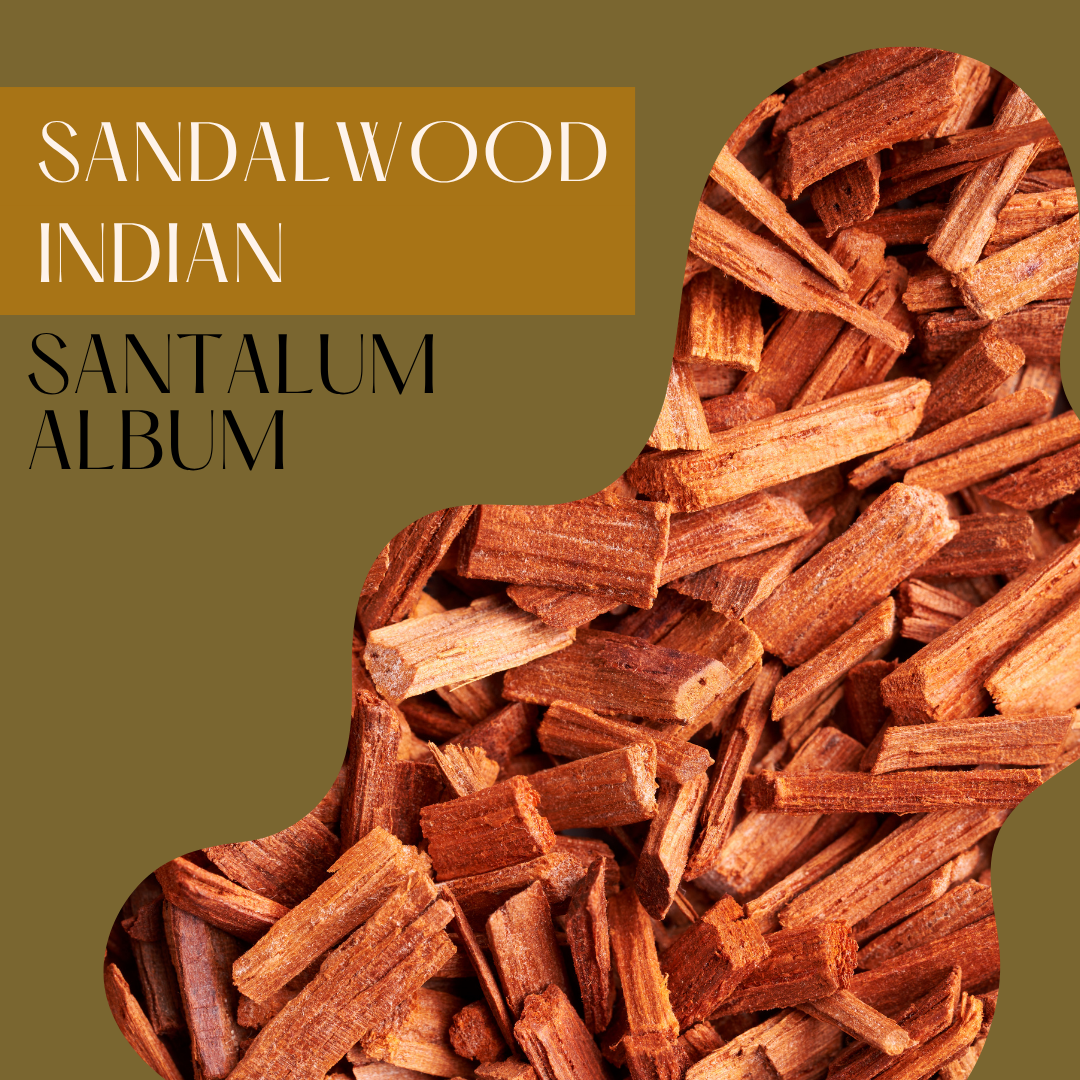
Botanical Name: Santalum album
Botany and Origins: The sandalwood oil of commerce is mainly obtained from East Indian sandalwood, Santalum album. Other oils sold as sandalwood are derived from other Santalum species or trees that are not members of the Santalaceae family.
Santalum album is a small evergreen tree up to 9m. It is native to and cultivated in the tropical regions of Asia such as India, Sri Lanka, Malaysia, Indonesia and Taiwan. India is the main producer of sandalwood oil. The tree is a root parasite. A sandalwood seedling can survive only by becoming attached to the roots of other plants. Once the roots are well attached to an adjoining plant, the sandalwood tree is then also able to obtain nutrients directly from the soil. The essential oil is principally contained in the heartwood and larger roots. Heartwood formation accelerates rapidly from 20 years and is at its prome in tree 30 to 60 years old. Harvesting sandalwood for timber and oil involves felling the tree by uprooting, not cutting the trunk. Only mature trees are harvested. The Indian government has strict regulations governing harvesting of sandalwood. To manufacture the oil, only the heartwood of trees over 30 years old should be used. If younger trees are used, you end up with an inferior oil. The Indian government has set a standard which specifies that the oil must contain a minimum of 90% santalols.
Method of Extraction: Sandalwood oil is obtained via steam distillation or water distillation from the coarsely powdered heartwood and the major roots.
Cultivation: Conventional.
Australian-grown Indian Sandalwood represents a contemporary cultivation of Santalum album, the same species responsible for the celebrated Mysore Sandalwood. Established under carefully managed plantation conditions, these trees are cultivated over decades to allow the development of aromatic heartwood before harvesting.
Within the sandalwood family, Australian-grown Indian Sandalwood occupies a distinctive position. Sharing the same botanical species as Mysore Sandalwood, it offers the characteristic creamy, smooth, and rounded aroma associated with Santalum album. Compared to Australian Sandalwood (Santalum spicatum), it possesses greater richness and depth, while expressing a lighter and more contemporary character than traditional Mysore Sandalwood.
Today, Australian cultivation has become an important source of sustainably produced Santalum album, helping to preserve and extend the legacy of one of the world's most treasured aromatic woods.
Historical and Traditional Uses: Sandalwood is one of the oldest known aromatic materials, and has at least 4,000 years of history of use. It is believed that the oil was known in Sri Lanka over 1,000 years ago, but it is only in the last 100 years that the oil has become an important aromatic oil. The use of sandalwood and its products became an integral part of Brahmin, Buddhism and other religious rituals. Sandalwood sawdust and oil, gum arabic and other materials were moulded into incense sticks.
Sandalwood's common name is derived from the Sanskrit chandana. Sandalwood is considered one of the finest woods for carving and the highest quality heartwood is often reserved for this use. .It is generally usef for ornamental objects and furniture. The sawdust is used in incense sticks or further powdered for use in sachets to scent stored clothes. A paste of the sandalwood powder is applied to the forehead at religious ceremonies by Hindus. The perfume industry uses sandalwood oil extensively. It is widely used for its tenacious base note, which acts as a fixative, and its ability to blend and harmonise with other essential oils. Sandalwood was rarely mentioned in medieval European herbals. It was not until the 18th century that sandalwood became well known and highly prized in Europe. It was recommended for the treatment of gonorrhoea and urinary tract infections.
Pharmacology and Clinical Studies: Sandalwood oil is reported to have diuretic and urinary antiseptic properties. Clinical trials have identified that alpha-santalol and beta-santalol have a sedative effect. The oil has also been reported to significantly decreases the incidence of papillomas.
Indications:
- Lymphatic System: Sandalwood is beneficial for treating venous and lymphatic stasis such as varicose veins and swollen lymph nodes. It is suggested that this may be due to the sesquiterpene alcohols which have an anti-inflammatory effect.
- Nervous System: Sandalwood oil has a relaxing effect on the nerves and may be used for hot, agitated emotional states that lead to conditions such as headache, insomnia and nervous tension.
- Respiratory System: Sandalwood is recommended for the treatment of respiratory tract infections, especially when its soothing, demulcent effects are required. It is recommended for chronic bronchitis involving a chronic dry cough.
- Urinary System: Sandalwood oil has traditionally been used for the treatment of genitourinary tract infections such as cystitis and gonorrhoea. Sandalwood is an astringent and helps to resolve mucous congestion. Sandalwood oil helps to restore the mucous membrane and minimise the risk of infection.
- Skin Care: Applied to the skin, sandalwood oil is soothing, cooling and moisturising and primarily used for dry skin conditions caused by loss of moisture and skin inflammations. It may be used to relieve eczema and psoriasis and for the treatment of oily skin and acne.
Safety: Sandalwood oil is non-toxic, non-irritating and non-sensitising.
Country of Origin: Australia
Size: 5ml, 10ml (for 15ml and above, please contact us)
Share
Additional Information
Collapsible content
How to use
Diffuse & Inhale
Add 3–6 drops to a diffuser with water.
Breathe in directly from a tissue or personal inhaler for an instant lift.
Apply to Skin
Always dilute: 1–2 drops per teaspoon of carrier oil.
Use for massage, spot treatment, or in your bath.
Safety Tips
Patch test before use.
Avoid eyes and sensitive areas.
Keep away from children and pets.
Store in a cool, dark place.
Ingredients
Santalum album