

THE NATURALIST GRANDEUR
Nutmeg
Nutmeg
Couldn't load pickup availability
Botanical Name: Myristica fragans
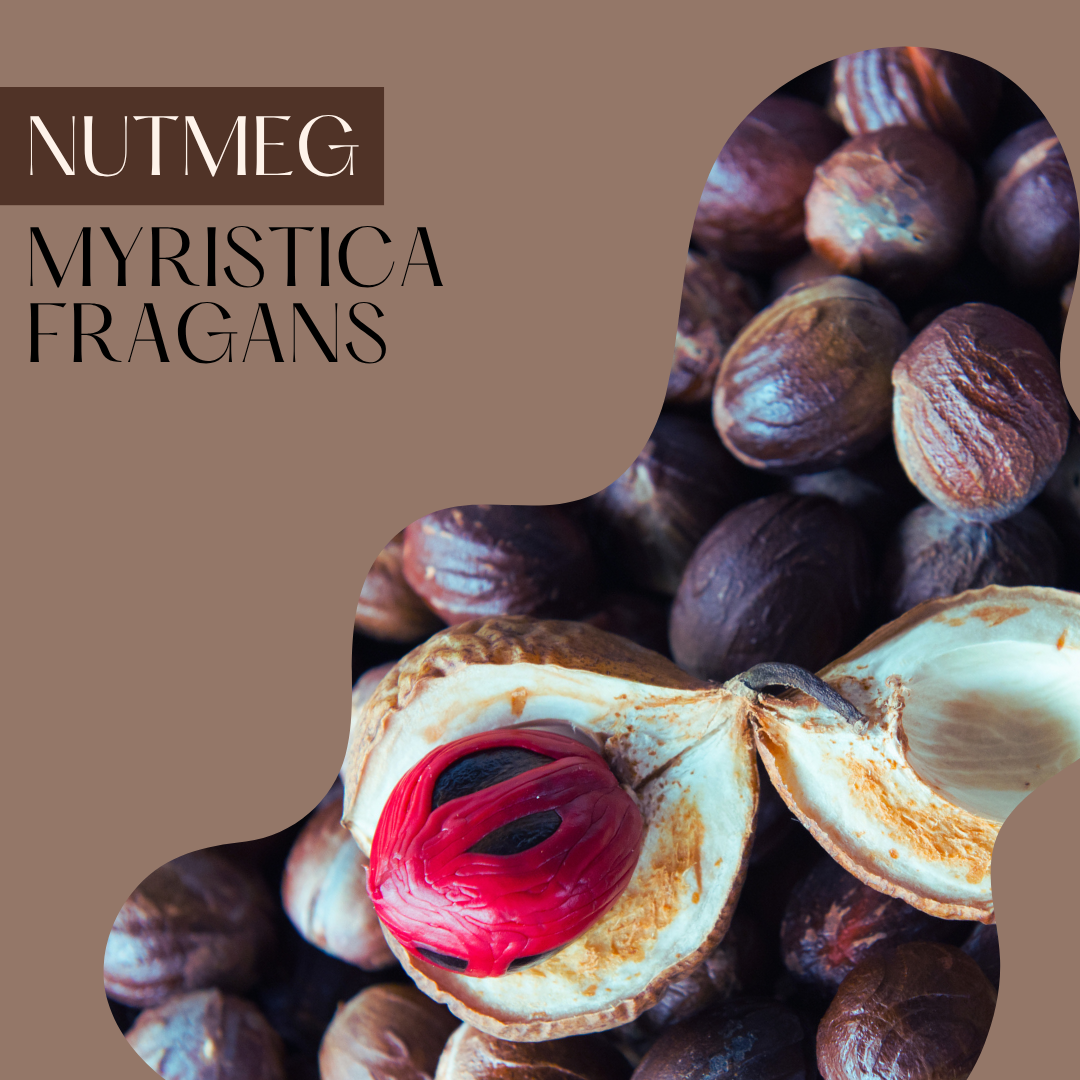
Botany and Origins: Nutmegs are the dried kernels of the seeds of Myristica fragans, an evergreen tree with dark green leaves, yellow flowers without petals and large yellowish fruit. All parts of the tree are aromatic. Nutmeg is native to Banda and Amboina islands in the Moluccas, Indonesia, and is seldom found as a wild plant, because of its popularity as a spice. Nutmeg is commercially cultivated in Indonesia, Grenada and Sri Lanka. The dried finger-like husk which surrounds the nutmeg seed inside the shell of the fruit is known commercially as mace. Dried, pulverised mace is a well known household spice.
Method of Extraction: Nutmeg essential oil is produced by steam distillation or steam and water distillation of the freshly comminuted dried nutmegs.
Cultivation: Conventional
Historical and Traditional Uses: The use of nutmeg as a food flavouring and a medicine has a long history. It was recorded in the Sanskrit as jai phal and probably arrived by trade from the Hindu colonists of Java. Nutmeg was not known to the Greeks or Romans. The first record of nutmeg in Europe was in 540 AD by Actius of Constantinople. It is believed that Arab traders brought it to Europe form the Moluccas via Java and INdia and, as with other spices, the Arabs hid the true source to avoid competition. By the 12th century, it was well known in Europe and in 1191, when Emperor Henry VI entered Rome for his coronation, the streets were fumigated with nutmegs and other strewn aromatics.
Nutmegs have long been known for their narcotic affect. The first recorded hallucinogenic effect was by Lobelius in 1576. The physiologist JE Purkinje in 1829 ate three nutmegs and described the effects as similar to cannabis intoxication, including disorientation, hallucinations and later a deep sleep. The response to nutmeg intoxication is extremely varied. It appears that freshly grated nutmegs produce the most profound intoxication. Nutmeg has been used in herbal medicine for gastrointestinal ailments such as diarrhoea, gastric spasms and flatulence. Mace has been used as an antiparasitic and is externally used for the treatment of rheumatism.
Pharmacology and Clinical Studies: Nutmeg is reported to have psychotropic properties. Nutmeg extracts have been found to inhibit the biosynthesis of prostaglandins in studies. The anti-inflammatory activity of mace was confirmed. Myristicin is toxic to humans and large doses of nutmeg or its oil may cause convulsions.
Indications:
- Digestive System: Nutmeg oil is useful as a digestive stimulant, helping people who cannot assimilate food. It may be useful for the treatment of flatulence, nausea, chronic vomiting and diarrhoea.
- Musculoskeletal System: It is an excellent oil to add to a massage oil because of its warming property for muscular aches and pains as well as rheumatism.
- Nervous System: It is classified as a tonic and stimulant and an aid for general fatigue.
Safety: Nutmeg oil is non-toxic, non-irritating and non-sensitising. While ground nutmeg is moderately to strongly psychotropic when taken in high oral doses, the effect of the essential oil is very weak and it appears that non-oral doses will not have any affect at all.
Country of Origin: India
Size: 10ml, 30ml, 50ml (for 100ml and above, please contact us)
Share
Additional Information
Collapsible content
How to use
Diffuse & Inhale
Add 3–6 drops to a diffuser with water.
Breathe in directly from a tissue or personal inhaler for an instant lift.
Apply to Skin
Always dilute: 1–2 drops per teaspoon of carrier oil.
Use for massage, spot treatment, or in your bath.
Safety Tips
Patch test before use.
Avoid eyes and sensitive areas.
Keep away from children and pets.
Store in a cool, dark place.
Ingredients
Myristica fragans