

THE NATURALIST GRANDEUR
Myrtle
Myrtle
Couldn't load pickup availability
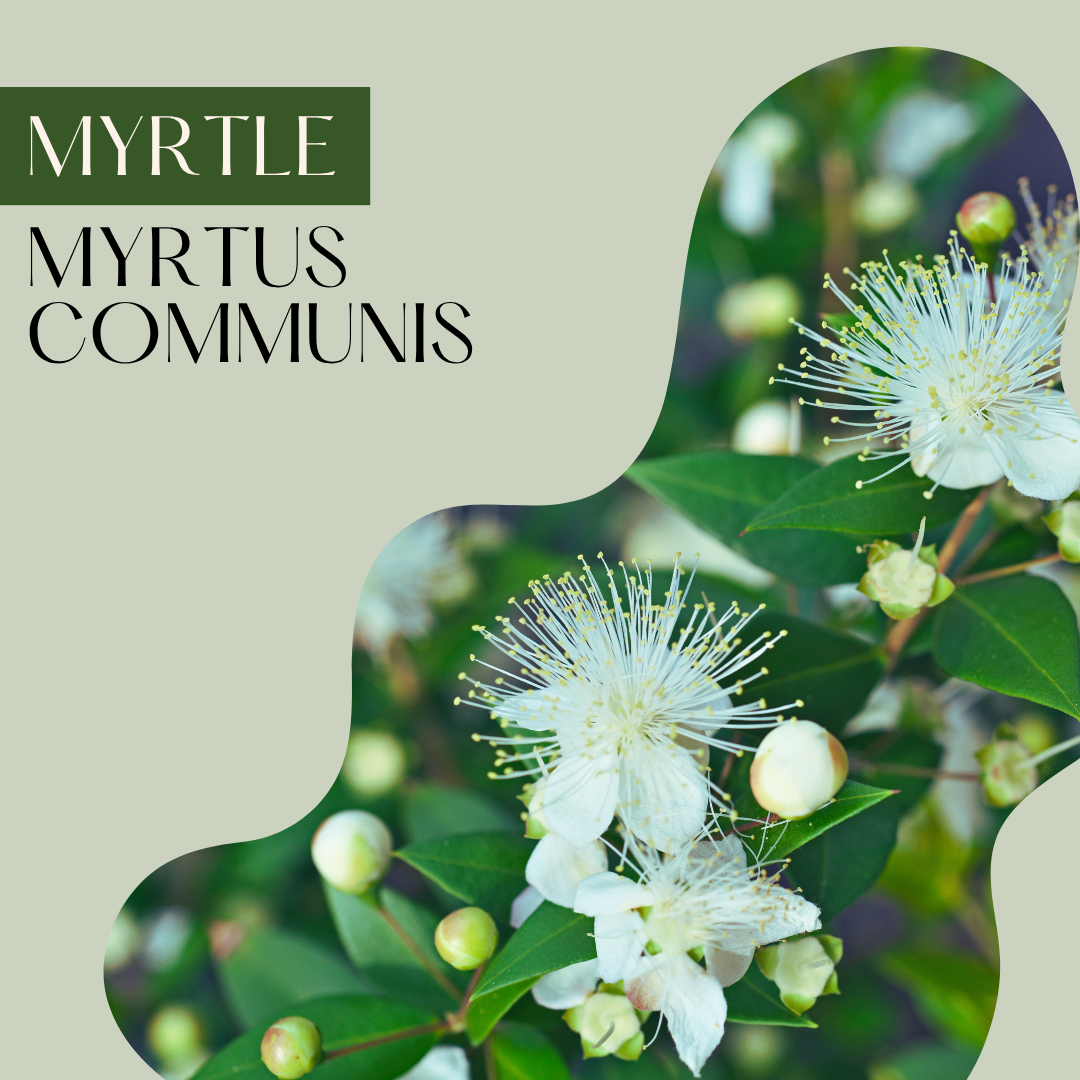
Botanical Name: Myrtus communis
Botany and Origins: Myrtle is an evergreen shrub or small tree, between 3 to 7m, with many branches, a brownish-red bark and small sharp pointed leaves. It has fragrant white or pinkish flowers. It is native to the Mediterranean region and western Asia. The oil is produced in Tunisia, France, Corsica, Spain, Morocco and Italy. Myrtle should not be confused with the wax myrtle Myrica cerifera or bog myrtle Myrica gale, whose essential oils are toxic.
Method of Extraction: Myrtle essential oil is produced by steam distillation of the leaves and twigs and sometimes the flowers too.
Cultivation: Conventional
Historical and Traditional Uses: The ancient Persians regarded myrtle as a holy plant. Myrtle was a symbol of love and peace to the Jews and the Greeks regarded it as sacred. The extracts of the leaves were prescribed for lung and bladder infections. An extract of the leaves is used in north Africa to alleviate coughs and chest infections. In the 16th century, the leaves and flowers were the major ingredients of a skin lotion known as 'angels water'. The berries are used in bitters and certain liqueurs.
Pharmacology and Clinical Studies: Myrtle is reported to be effective for treating head lice and their eggs.
Indications:
- Respiratory System: Myrtle is beneficial for chronic conditions of the respiratory system such as bronchitis, catarrhal conditions and chronic coughs. It has an unobtrusive odour and is well tolerated by young children. It is slightly sedative and is recommended as a chest rub or inhalation or oil burner at night.
- Urinary System: The oil has been used as an antiseptic for the treatment of urinary tract infections. For bladder infections or infections of the ureter, a sitz bath is recommended.
- Skin Care: Myrtle may be used for the treatment of acne, oily skin and open pores. It is a gentle oil which is regenerating, astringent and anti-allergenic. It has been used to treat haemorrhoids due to its astringent properties.
Safety: Myrtle oil is non-toxic, non-irritating and non-sensitising.
Country of Origin: Morocco
Size: 10ml, 30ml, 50ml (for 100ml and above, please contact us)
Share
Additional Information
Collapsible content
How to use
Diffuse & Inhale
Add 3–6 drops to a diffuser with water.
Breathe in directly from a tissue or personal inhaler for an instant lift.
Apply to Skin
Always dilute: 1–2 drops per teaspoon of carrier oil.
Use for massage, spot treatment, or in your bath.
Safety Tips
Patch test before use.
Avoid eyes and sensitive areas.
Keep away from children and pets.
Store in a cool, dark place.
Ingredients
Myrtus communis