

THE NATURALIST GRANDEUR
Myrrh
Myrrh
Couldn't load pickup availability
Botanical Name: Commiphora myrrha
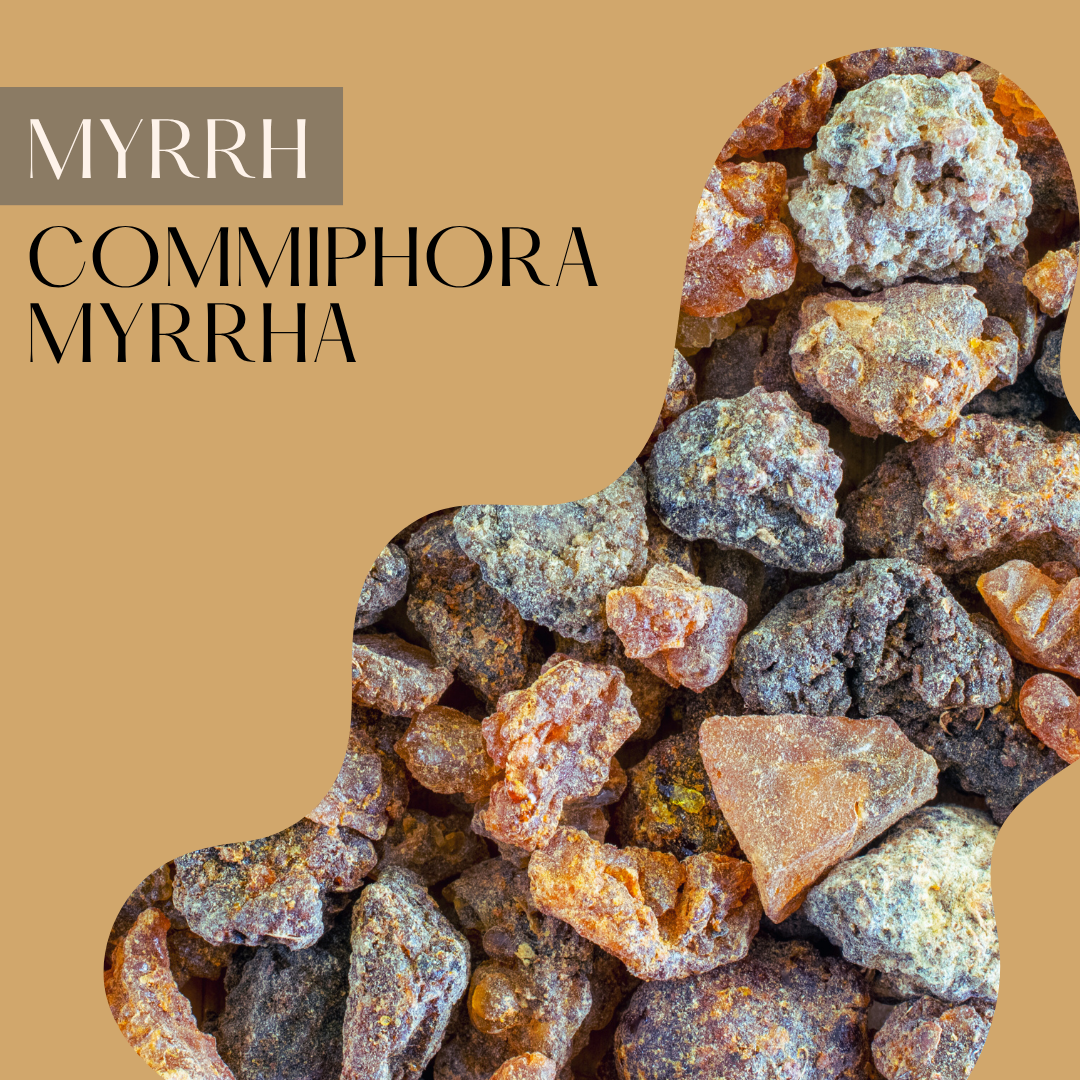
Botany and Origins: The name myrrh is derived from the Arabic and Hebrew word mur, which means bitter. Myrrh is the resinous exudation, or gum, collected from the myrrh bush, botanically known as Commiphora molmol, either when it is wounded or from natural fissures. There are several commiphora species from which the myrrh resin is produced. The resin flows out as a thick pale yellow liquid, and turns reddish-brown as it dries and hardens. The bush, which is a native of north-east Africa and southern Arabia, has sturdy knotted branches, trifoliate leaves and small white flowers. To increase the yield and production, incisions are made into the bark. Lumps of the gum often fall to the ground and become contaminated with sand, other lumps are peeled off the trunk, and these usually make a better grade of myrrh. However, myrrh cannot be evaluated just by its appearance. Lumps of high odour value may have poor appearance because they have fallen to the ground. Myrrh resin consists of rounded or irregular tears, or agglutinated masses of smaller and larger tears of a moderate yellow to dark or reddish-brown colour. The lumps are usually covered with a lighter-coloured or yellowish dust.
Method of Extraction: Myrrh essential oil is steam distilled from the resin.
Cultivation: Conventional
Historical and Traditional Uses: Myrrh is one of the oldest known aromatic substances which is mentioned as far back as 4,000 years. It was an ingredient of incense used for religious ceremonies and fumigations by the ancient Egyptians. It was an ingredient of the famous Egyptian perfume 'kyphi', and was an important ingredient in embalming. It was reputed to reduce wrinkles and preserve a youthful complexion. Egyptian women used myrrh in their facial preparations. It has a slighting cooling effect on the skin, and so would be especially useful in a hot dry climate. Myrrh's therapeutic properties are frequently mentioned in the old and new testaments, the Koran, and in Greek and Roman texts. Myrrh was one of the gifts presented to the infant Jesus. It was presented at the death of Christ. English herbalist Joseph Miller certainly givers us a detailed account of myrrh: Myrrh is of an opening, heating, drying nature, resists putrefaction, and is of great service in uterine disorders, opens the obstruction of the womb, procuring the menses, expediting the birth, and expelling the secundines.
Myrrh was introduced in Chinese medicine in the 7th century and was used for treating conditions involving bleeding, pain and wounds. Myrrh is primarily used as a tincture containing 20% of myrrh in 85% alcohol. The tincture is astringent and is used for inflammation of the mucous membranes of the throat and mouth, indigestion, bronchial congestion and as an emmenagogoue.
Pharmacology and Clinical Studies: Myrrh is reported to have astringent properties on mucous membranes as well as antimicrobial properties.
Indications:
- Antimicrobial Properties: Myrrh is well known for its antibacterial, antifungal and anti-inflammatory actions. The tincture can be used in the treatment of mouth, gum and throat infections. The oil can be incorporated into an ointment which is applied externally for the treatment of haemorrhoids, bed sores and wounds.
- Digestive System: Myrrh oil is reputed to stimulate the stomach and digestive system and is a useful remedy for treating diarrhoea, dyspepsia and loss of appetite. The German Commission E Monographs recommend using 5 to 10 drops of myrrh tincture in a glass of water as a gargle for oral and pharyngeal mucosa.
- Respiratory System: Myrrh oil is an excellent expectorant and as such is beneficial in the treatment of coughs, bronchitis and colds.
- Nervous System: Myrrh oil instills a deep sense of calm and tranquility on the mind.
- Integumentary System: Myrrh oil is used for the treatment of chronic wounds and ulcers. This is due to its antiseptic, astringent, anti-inflammatory and antiphlogistic properties. It is beneficial for mature skin, wounds that are slow to heal, and for weepy eczema and athlete's foot. It heals cracked and chapped skin and can be added to skin care creams.
- Reproductive System: Myrrh is a uterine stimulant and promotes menstruation thus relieving painful periods. It stimulates the uterus and promotes the menses and childbirth.
Safety: Myrrh oil is non-toxic, non-irritating and non-sensitising. However, it is contraindicated during pregnancy.
Country of Origin: Somalia
Size: 10ml, 30ml, 50ml (for 100ml and above, please contact us)
Share
Additional Information
Collapsible content
How to use
Ingredients
Commiphora myrrha