

THE NATURALIST GRANDEUR
Lavandin Grosso
Lavandin Grosso
Couldn't load pickup availability
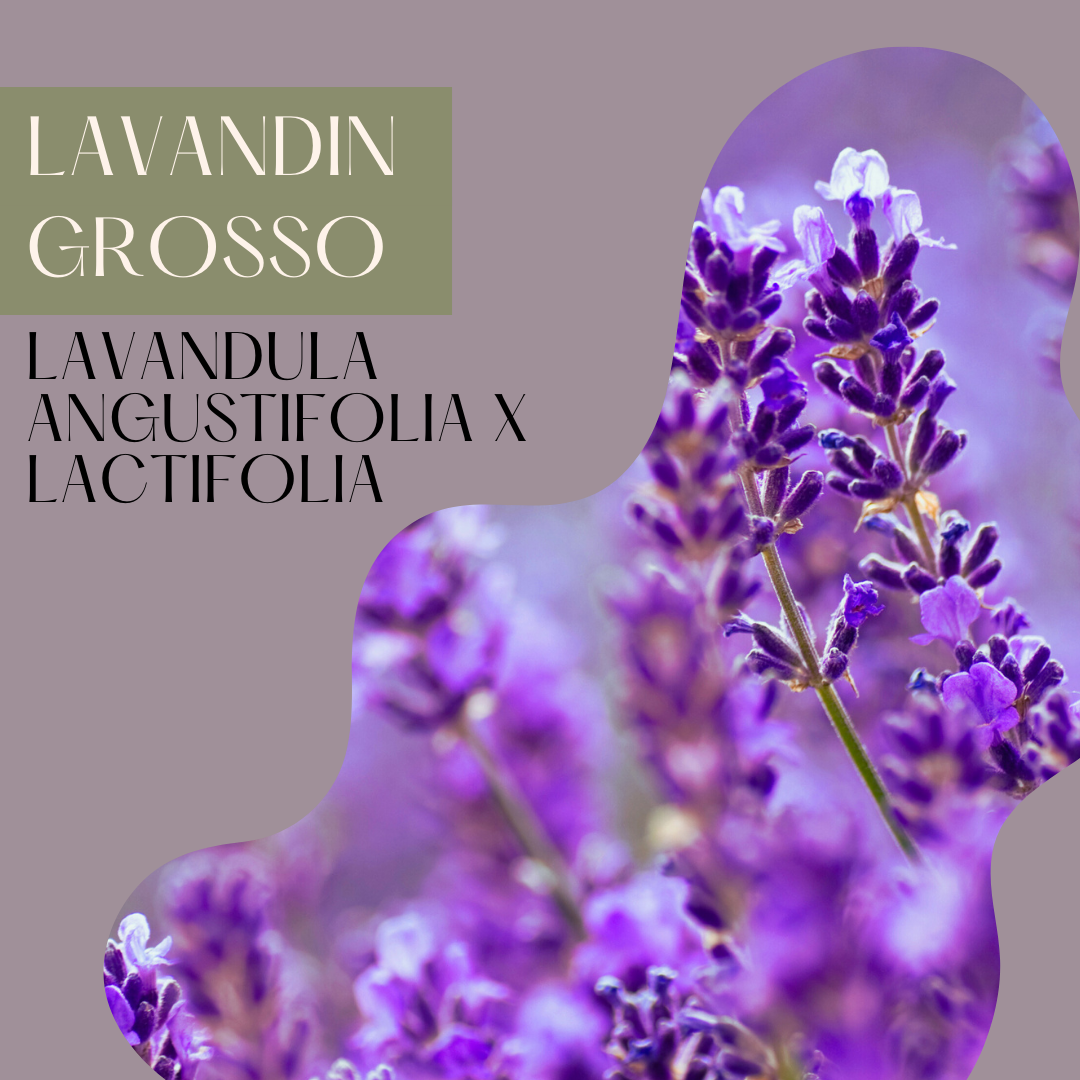
Botanical Name: Lavandula angustifolia x lactifolia
Botany and Origins: Lavandin is a hybrid of true lavender and spike lavender. The lavandin plant is larger and much hardier than that of true lavender. It is ideally suited to large-scale cultivation and harvesting methods. It is very popular with the fragrance industry as it yields twice the amount of oil as true lavender and is commonly used in soaps, detergents and cosmetics.
Method of Extraction: Lavandin oil is steam distilled from the freshly cut flowering tops and stalks.
Cultivation: Conventional
Historical and Traditional Uses: Although not used in antiquity, lavandin has inherited and adapted the uses of its parent plants. From the mid 20th century onward, lavandin became a staple in soaps, detergents, household cleaners, and inexpensive perfumes because its aroma is fresh, sharp, and penetrating, somehow similar to lavender but stronger and slightly camphoraceous. Just like lavender, dried lavandin flowers were placed in sachets to scent linens, repel insects, and freshen wardrobes. Due to its higher camphor content compared to true lavender, lavandin oil was valued as an inexpensive antiseptic additive in household sprays and floor washes. Traditionally used to deter moths and pests in stored fabrics, echoing lavender's role since medieval times. Though not historically folk medicine, lavandin oil has been used since its commercial availability in massage oils for sore muscles and stiff joints due to its stimulating and warming qualities. While true lavender is considered more calming, lavandin oil has still been burned, diffused, or added to bathwater in European households for a clean, herbaceous scent associated with relaxation and freshness. Because of its camphor content, which can be irritating in high concentration, it was less favoured for delicate skin or direct medicinal use compared to true lavender.
Pharmacology and Clinical Studies: Lavandin oil showed good activity against Staphylococcus aureus, Candida albicans, and Escherichia coli in laboratory. Due to higher camphor content, lavandin is slightly less calming and more stimulating than true lavender.
Indications:
- Musculoskeletal System: It gives a mild analgesic, anti-inflammatory, and rubefacient effects which makes it useful for sore muscles, stiffness, and sports recovery as well as chronic tension.
- Respiratory System: It acts as a mild expectorant and decongestant and is useful for chest rubs during colds, congestion, or sinus discomfort.
- Nervous System: As it is more stimulating than true lavender, it is recommended to use in daytime blends for easing mental fatigue or mild stress without causing drowsiness and for general refreshment.
- Antimicrobial Properties: Its antibacterial and antifungal properties make it suitable for household cleaning sprays, linen sprays or insect repellent sprays.
Safety: Lavandin Grosso oil is non-toxic, non-irritating and non-sensitising.
Country of Origin: France
Size: 10ml, 30ml, 50ml (for 100ml and above, please contact us)
Share
Additional Information
Collapsible content
How to use
Diffuse & Inhale
Add 3–6 drops to a diffuser with water.
Breathe in directly from a tissue or personal inhaler for an instant lift.
Apply to Skin
Always dilute: 1–2 drops per teaspoon of carrier oil.
Use for massage, spot treatment, or in your bath.
Safety Tips
Patch test before use.
Avoid eyes and sensitive areas.
Keep away from children and pets.
Store in a cool, dark place.
Ingredients
Lavandula angustifolia x lactifolia