

THE NATURALIST GRANDEUR
Jasmine
Jasmine
Couldn't load pickup availability
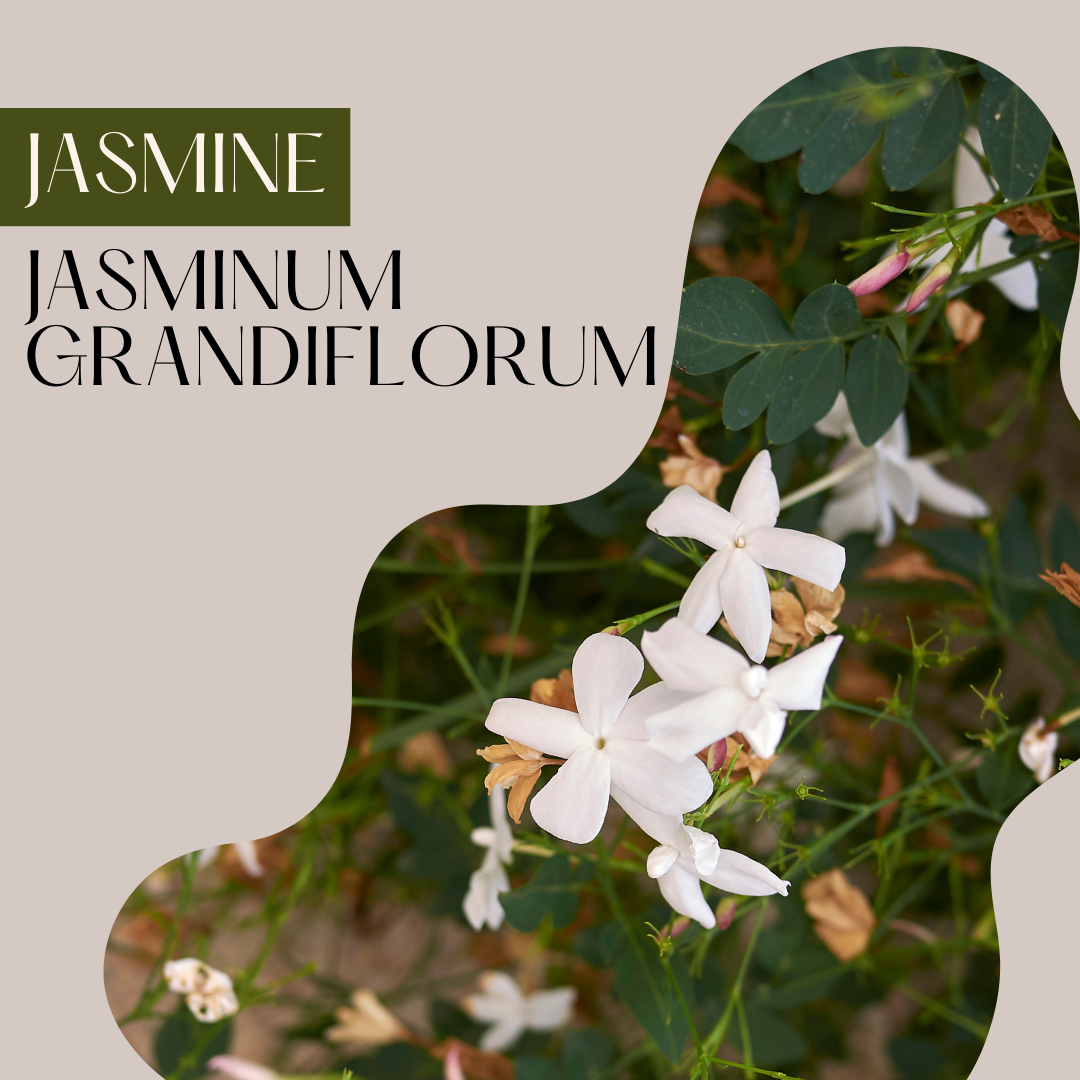
Botanical Name: Jasminum grandiflorum
Botany and Origins: The Jasminum species are evergreen deciduous shrubs or shrubby climbers with white, pink or yellow very fragrant flowers. Jasmine is native to the Indian and South East Asian region. The three commercially cultivated species used for essential oil production are:
- Jasminum auriculatum
- Jasminum grandiflorum
- Jasminum sambac
Jasminum auriculatum is native to souther India and has adapted to regions with high temperature and above average rainfall.
Jasminum grandiflorum is native to northern Iran, Afghanistan and Kashmir, and has been introduced and is commercially cultivated in many countries, principally around the Mediterranean. It has adapted to a milder climate. Grasse, a town in the south of France, became the principal supplier of jasmine absolute. However, due to the high costs of productio, most jasmine cultivation is now in countries such as Algeria, Morocco, Egypt and India.
Jasminum sambac is native to southern India and has a long history of cultivation in India. It is commonly referred to as Mogra.
The flowers open in the early morning and there is a rapid and significant loss of essential oil once the buds have opened. For example, one of the constituents, indole, dropped by 0.6 to 0.8 mg/100g of flowers in the first hours after the buds open. Flowers are usually picked by hand as a suitable method for mechanical harvesting has not been commercially developed. Flowers must be processed without delay. Approximately 1,000kg of jasmine flowers will yield 2.5kg of concrete, and half of this amount as an absolute.
Method of Extraction: Jasmine absolute is produced by solvent extraction.
Cultivation: Conventional
Historical and Traditional Uses: Jasmine's fragrant flowers have been used since antiquity for personal adornment and in religious ceremonies. In India, jasmine is known as "Queen of the Night", because the scent is stronger during the hours of darkness. The importance of the jasmine flower has been symbolically used throughout the centuries. In China, the jasmine flower symbolises the sweetness of women while in India, it symbolises divine hope. In the 15th century, jasmine was cultivated for its fragrant flowers in the garden of the emperors of China, Afghanistan, Iran and Nepal. It was not until around 1600 when jasmine was bought to Spain by the Moors that it first made its appearance in Europe. In China, the flowers of Jasminium grandiflorum are mainly used to treat hepatitis, pain due to dysentery, while the flowers of Jasminum sambac are used to treat conjunctivitis, skin ulcers and tumours, as well as abdominal pain due to dysentery. Jasmine has long been used for its effect on the reproduction system. It can be used as an aphrodisiac and to assist in childbirth. Dried jasmine flowers from Jasminum sambac are used as an ingredient of Chinese jasmine tea.
Pharmacology and Clinical Studies: A clinical trial found that jasmine flowers from Jasminum sambac were effective for the suppression of puerperal lactation. It was suggested that tactile and olfactory stimuli from the flowers were responsible for the suppression of lactation.
Indications:
- Nervous System: The therapeutic value of Jasmine absolute is inseparable from the exquisite, comforting sweetness of its aroma and the effect it has on the mind and emotions. Jasmine is considered one of the most effective essential oils for nervous anxiety, restlessness and depression. It has been described as a powerful antidepressant of a stimulating nature and is recommended when depression has given rise to lethargy. The effects of Jasmine is capable of changing our mood so intensely that it offers little choice other than optimism. It is especially helpful for emotional dilemmas, particularly when they involve relationship and sex.
- Reproductive System: Jasmine absolute is one of the most useful oils to use during childbirth. If it is used as a massage oil on the abdomen and lower back in the early stages of labour, it will relieve the pain and strengthen the contractions. It helps with the expulsion of the placenta after delivery and aids post-natal recovery. It can be used to relieve spasms of the uterus and delayed and painful menstruation.
- Skin Care: Jasmine absolute is particularly useful in skin care and is used to treat dry and irritated skin.
Safety: Jasmine absolute is non-irritating, non-sensitising and non-photo toxic.
Country of Origin: India
Size: 10ml, 30ml, 50ml (for 100ml and above, please contact us)
Share
Additional Information
Collapsible content
How to use
Diffuse & Inhale
Add 3–6 drops to a diffuser with water.
Breathe in directly from a tissue or personal inhaler for an instant lift.
Apply to Skin
Always dilute: 1–2 drops per teaspoon of carrier oil.
Use for massage, spot treatment, or in your bath.
Safety Tips
Patch test before use.
Avoid eyes and sensitive areas.
Keep away from children and pets.
Store in a cool, dark place.
Ingredients
Jasminum grandiflorum