

THE NATURALIST GRANDEUR
Fennel Sweet
Fennel Sweet
Couldn't load pickup availability
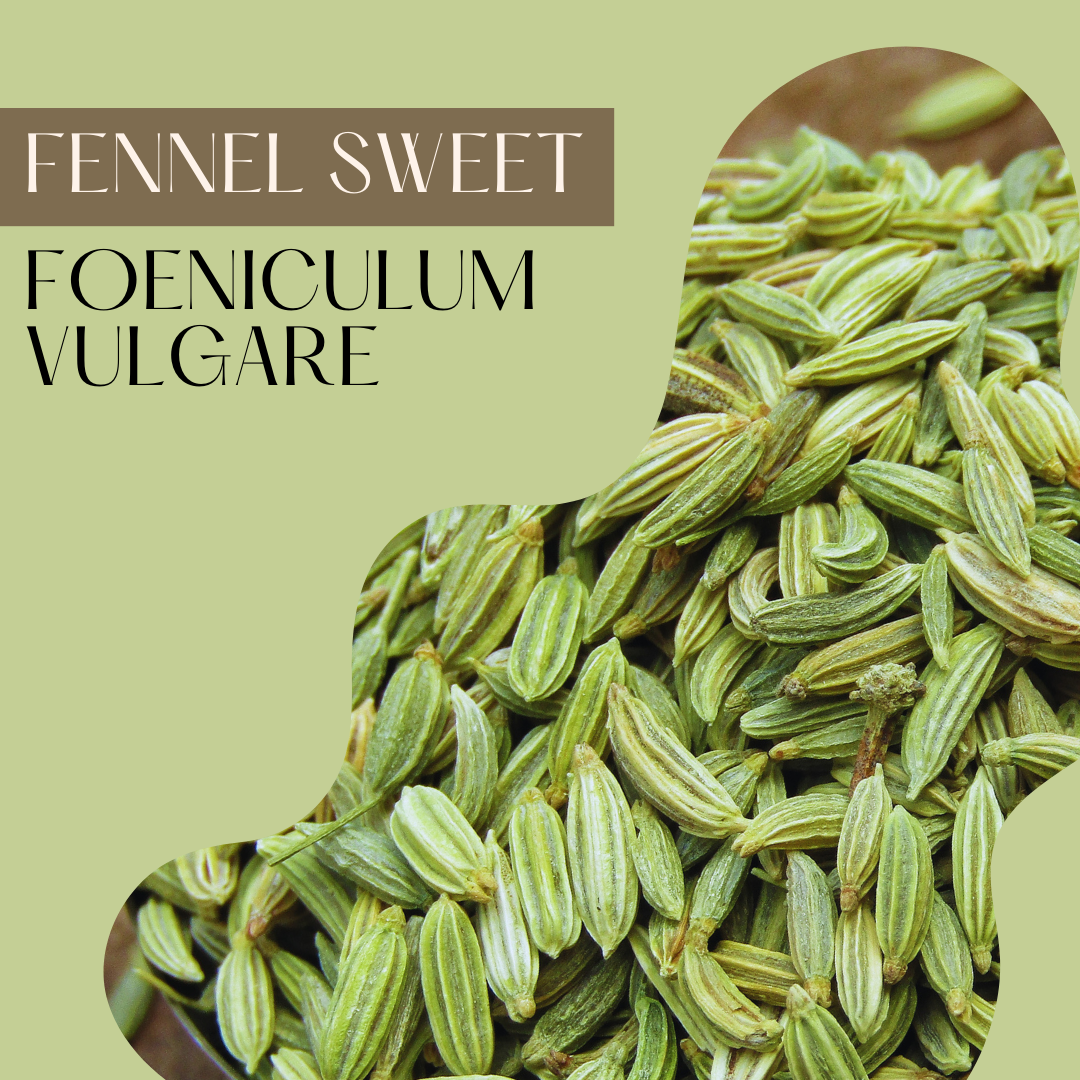
Botanical Name: Foeniculum vulgare
Botany and Origins: Fennel is a biennial or perennial herb that grows up to 2m high, with fine, feathery leaves and umbels of golden-yellow flowers. It is indigenous to Mediterranean countries such as Italy, Greece and France. The name of fennel comes from Latin foenum, meaning hay, and the Romans called it foeniculum.
Method of Extraction: Fennel Sweet oil is produced from the distillation of the crushed seeds.
Cultivation: Conventional
Historical and Traditional Uses: Fennel was well known to the ancient Egyptians, the Greeks and the Romans. It was cultivated for its aromatic fruits and succulent edible shoots. The Greeks were the first to recognise its value as a slimming aid. The ancient Greek name of the herb, Marathron, from maraino (to grow thin), probably refers to this property. It was said to convey longevity, and to give strength and courage. The ancient Greeks ate the seeds for this reason and to help control their weight while training for the Olympics. The seeds were carried by Roman soldiers on long marches, to chew when they did not have time to stop and cook a meal, and by devout Christians to satisfy the cravings of hunger on fasting days.
During the Middle Ages the use of fennel was entwined with witchcraft and superstition. It was used with St John's Wort as protection against evil forces. It was hung inside houses and churches or above doors to protect those inside against the devil.
The dried, aromatic fruits or seeds are widely used in culinary preparations for flavouring bread and pastry, in candies, alcoholic liqueurs as well as in oral and medicinal preparations. In TCM, fennel has been used for centuries to treat snake bites, for which the powdered herb is used as a poultice.
Pharmacology and Clinical Studies: Fennel oil has been reported to have spasmolytic effects. It was found to be antispasmodic towards smooth muscle. It inhibits contractions induced by acetyl-choline in a calcium free medium. It was concluded that Fennel oil inhibited calcium release from intracellular stores and/or blocked binding proteins. Fennel oil exhibited antibacterial activities in vitro. Anethole and fenchone have been found to stimulate secretions of the upper respiratory tract. Fennel oil and anethole were found to have cholagogue and choleretic effect. Research also suggests that polymers of anethole are active oestrongenic compounds.
Indications:
- Digestive System: Fennel oil is traditionally used as a stomachic and a carminative in treating flatulence and other digestive problems. The oil is recommended in the German Commission E Monographs for peptic discomforts, spastic disorders of the gastrointestinal tract, feelings of fullness and flatulence.
- Lymphatic System: Fennel is a diuretic and lymphatic decongestant, assisting the body to eliminate toxins. It is often used for treating fluid retention, cellulite and obesity, as an essential oil and herbal tea.
- Reproductive System: Fennel is recommended for regulating the menstrual cycle, particularly where periods are scanty and painful. It may be used during menopause to reduce symptoms caused by fluctuating hormonal levels.
- Respiratory System: Like aniseed, Fennel oil is an antispasmodic and expectorant and is recommended for catarrh of the upper respiratory tract.
- Urinary System: Fennel is diuretic and traditionally used as an urinary tract antiseptic. It may be used for the treatment of urinary tract infections.
- Skin Care: Fennel oil is recommended in skin care preparation for the treatment of dull, oily and mature skin types.
Safety: Fennel Sweet oil should not be used during pregnancy or for infants and toddlers. Avoid during breast feeding, for oestrogen dependent cancers or endometriosis.
Country of Origin: Australia
Size: 10ml, 30ml, 50ml (for 100ml and above, please contact us)
Share
Additional Information
Collapsible content
How to use
Diffuse & Inhale
Add 3–6 drops to a diffuser with water.
Breathe in directly from a tissue or personal inhaler for an instant lift.
Apply to Skin
Always dilute: 1–2 drops per teaspoon of carrier oil.
Use for massage, spot treatment, or in your bath.
Safety Tips
Patch test before use.
Avoid eyes and sensitive areas.
Keep away from children and pets.
Store in a cool, dark place.
Ingredients
Foeniculum vulgare