

THE NATURALIST GRANDEUR
Eucalyptus Blue Gum
Eucalyptus Blue Gum
Couldn't load pickup availability
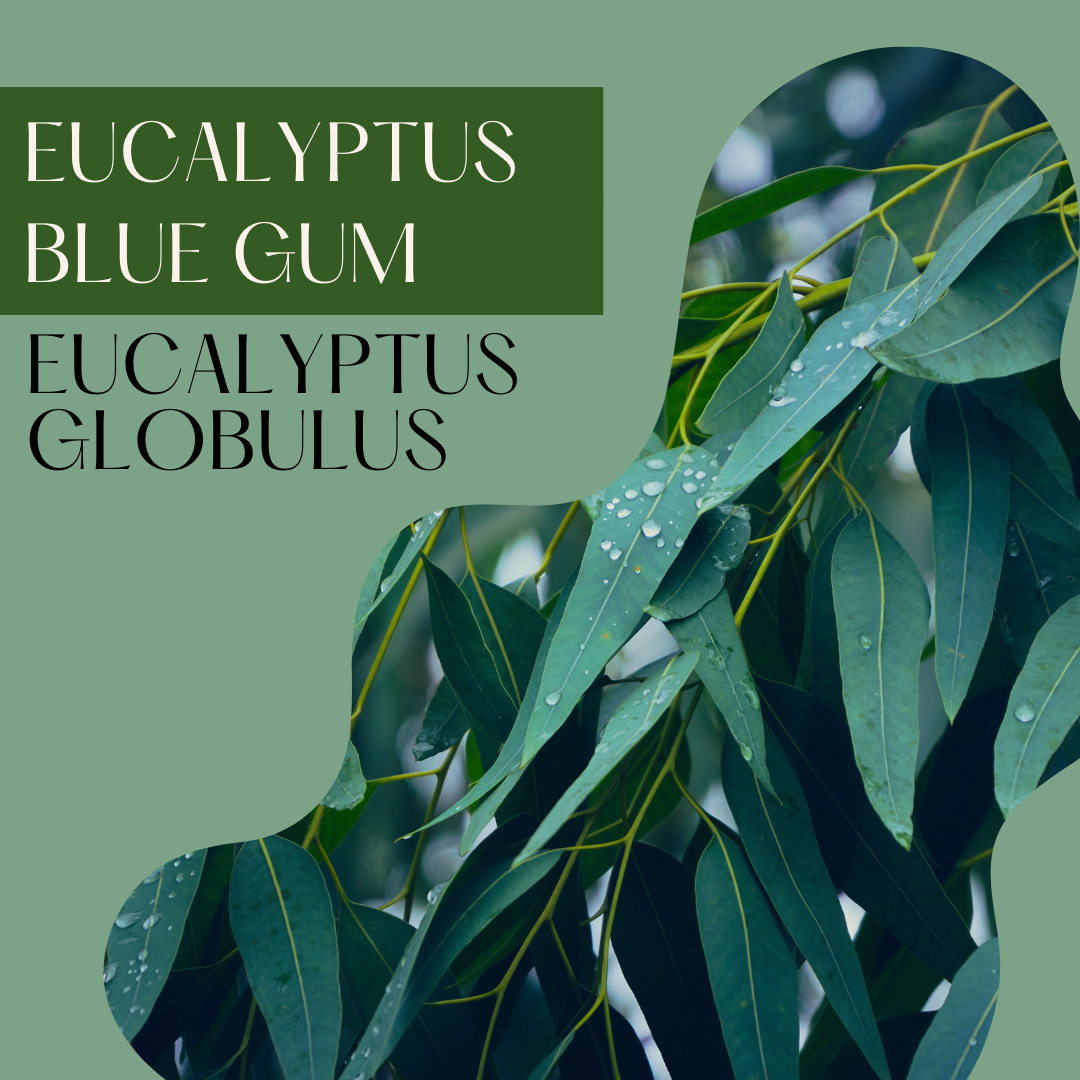
Botanical Name: Eucalyptus globulus
Botany and Origins: Almost all eucalypts are indigenous to Australia where they constitute approximately 75% of all tree flora. The large eucalyptus plantations in other countries have been established mainly from Australian seed, and are not so extensive that eucalypts form a significant proportion of the forested area in countries such as South Africa. Eucalypts are known to produce the hardest, heaviest and most durable wood known as "ironbark". The genus Eucalyptus was named by French botanist CL Brutelle L'Heritier from the Greek words eu (well) and kalipto (covered), referring to the cup like structure which is thrown off as the flower expands.
Of the 600 species of eucalyptus, fewer than 20 have ever been exploited commercially. The species of eucalyptus most commonly used for the production of essential oil are those with a high content of cineole.
Eucalyptus polybractea is also known as Tasmanian Blue Gum or Blue Gum. It is principally cultivated in Portugal, Spain and China. The timber is strong and durable and is used for construction purposes too.
The active therapeutic and principal constituent of the medicinal oils is 1,8-cineole. The quality of the oil is specified by the minimum standards which are defined in the British Pharmacopoeia (BP). It requires a eucalyptus oil to contain not less than 70% 1,8-cineole and to be free of alpha and beta-phellandrene. Although many eucalyptus species contain 1,8-cineole in their oils, only a limited number combine a composition high in 1,8-cineole with consistently high total yields and are suitable for commercial exploitation.
Method of Extraction: Eucalyptus oil is steam distilled from the fresh or partially dried leaves.
Cultivation: ACO & USDA Certified Organic
Historical and Traditional Uses: It was Baron Ferdinand von Mueller, the first government botanist of Victoria in 1853, who convinced his friend Joseph Bosisto, a Melbourne pharmacist, of the virtues of eucalyptus oils and the potential for developing an indigenous industry. In 1854, Bosisto built his first distillation plant on the banks of Dandenong Creek near Dandenong on the outskirts of Melbourne. By the 1880s, the eucalyptus oil industry had firmly established itself. Eucalyptus oil was in huge demand during World War I, as it was used to help control a meningitis outbreak and for the influenza of 1919. However, by 1930, the impact of overseas eucalyptus plantations impacted dramatically on Australian produced oil. The cineole-rich eucalyptus oils are widely used in medicine for inhalations, soaps, gargles and lozenges.
Pharmacology and Clinical Studies: Eucalyptus oil and 1,8-cineole have been reputed to have antiseptic and expectorant properties and strong antibacterial activity against several strains of Streptococcus. The clearing effect of cineole vapour on the nasal passage results in easier and deeper breathing. Good deep breathing and fresh air have always been associated with good health. It was also reported that cineole has considerable antimicrobial activity against gram-positive and gram-negative bacteria, as well as some fungi, and was more potent than citronellal and carypophyllene.
Indications:
- Analgesic Properties: Eucalyptus oil has been used to relieve insect bites and muscular aches and pains. It is indicatedfor rheumatic pain of a cold nature and may be used to relieve muscular aches and pains and neuralgia.
- Nervous System: It is recommended for the treatment of headaches, neuralgia and debility.
- Respiratory System: Eucalyptus is best known as a decongestant inhalation for colds and catarrh. It is recommended as an inhalation and for topical use for rhinitis, flu, otitis, sinusitis and bronchitis. It was suggested that a spraying of a 2% emulsion containing eucalyptus oil kills off 70% of local airborne staphylococci. During a respiratory infection such as a common cold, the nasal and lower respiratory passages become constricted which in turn makes breathing difficult. Research indicates that aromatic inhalations containing eucalyptus oil can significantly improves respiratory function. It has been suggested that the mechanisms of action of such respiratory congestion may be reflux, and related to nerve stimulation by the essential oils. The reputation of eucalyptus as a decongestant relies on its ability to stimulate cold receptors in the nose. During an infection with a common cold virus, the nasal and lower respiratory passages restrict the passage of air into the lungs because of vasoconstriction. Eucalyptus oil and cineole have the effect of reducing surface tension between water and air in the lungs, a property which would presumably enhance the effects of the lungs' own surfactant;
- Skin Care: It is effective as an insect repellent and is used to treat burns, blisters, cuts and wounds.
Safety: Eucalyptus oil has been reported to be non-toxic, non-irritant and non sensitising. Care has to be taken to prevent ingestion of the oil.
Country of Origin: Spain
Size: 10ml, 30ml, 50ml (for 100ml and above, please contact us)
Share
Additional Information
Collapsible content
How to use
Diffuse & Inhale
Add 3–6 drops to a diffuser with water.
Breathe in directly from a tissue or personal inhaler for an instant lift.
Apply to Skin
Always dilute: 1–2 drops per teaspoon of carrier oil.
Use for massage, spot treatment, or in your bath.
Safety Tips
Patch test before use.
Avoid eyes and sensitive areas.
Keep away from children and pets.
Store in a cool, dark place.
Ingredients
Eucalyptus globulus