

THE NATURALIST GRANDEUR
Chamomile German
Chamomile German
Couldn't load pickup availability
Botanical Name: Matricaria recutita
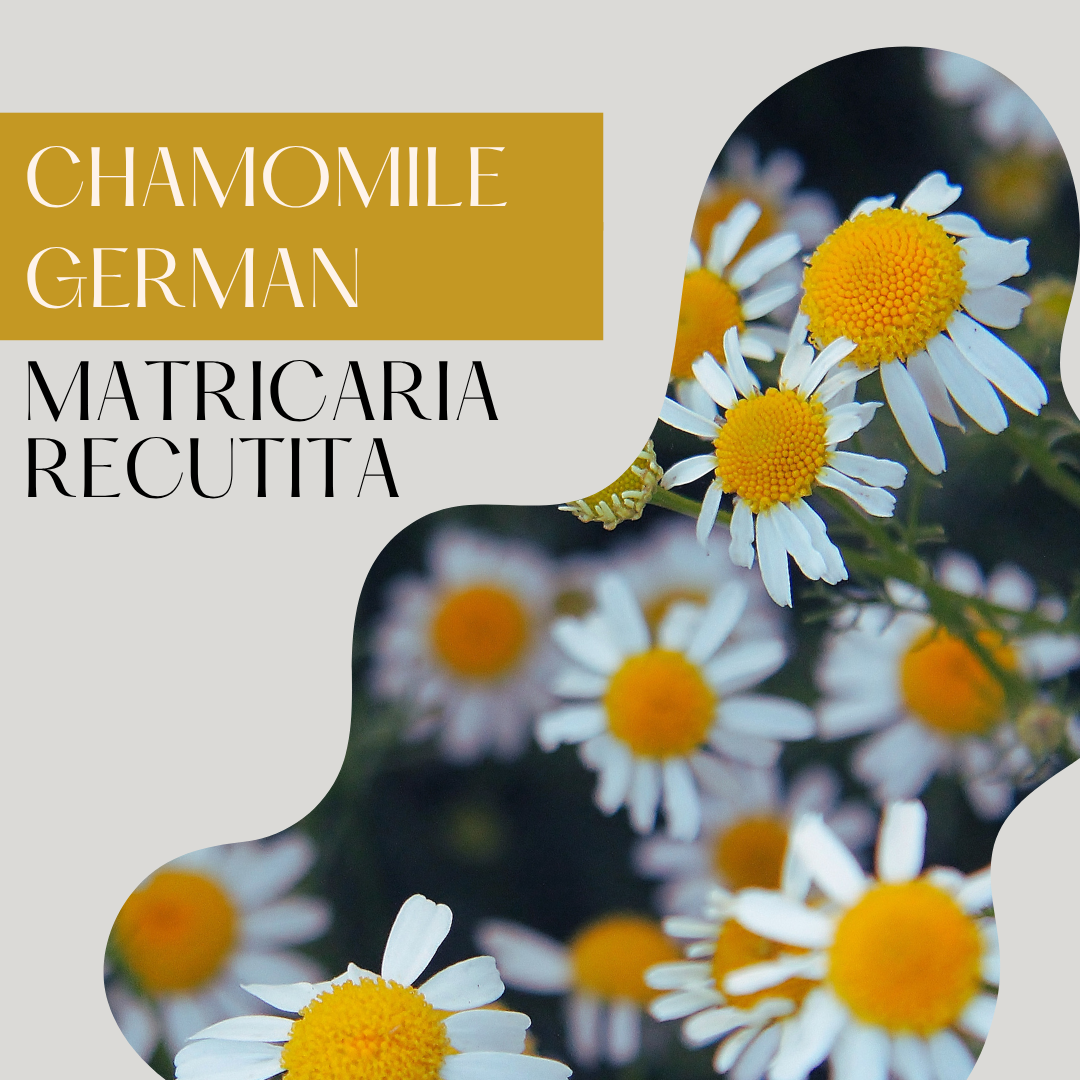
Botany and Origins: Chamomile German is a fragrant, low annual herb, up to 0.6m tall with delicate feather leaves and simple daisy-like white flowers on single stem. It is native to Europe, particularly to central and northern Europe. It is cultivated in Hungary, Yugoslavia, Bulgaria, Russia, Germany, Belgium and Spain. Hungary is one of the main producers of the oil. Frequent changes in the interpretation of the scientific name of Chamomile German have led to confusion over the past two decades. The current accepted scientific name is Matricaria recutita.
Method of Extraction: Chamomile German oil is steam distilled from the dried flower heads. The essential oil content is highest at the beginning of flowering,. Drying the flowers at 40 to 45 degrees Celsius is reported to preserve the matricarin and the essential oil is reputed to be the best.
Cultivation: Conventional
Historical and Traditional Uses: Since antiquity, chamomile flowers have been used internally for digestive disorders and externally for skin and mucous membrane irritations. It has been difficult to ascertain which species were used historically, as many plants within the Compositae family, or, in the most recent botanical nomenclature, Asteraceae family, were referred to by the common name of Chamomile. Chamomile German flowers are extensively used as a herbal tea. The oil is extensively used in cosmetics.
Pharmacology and Clinical Studies: The anti-inflammatory properties of Chamomile German oil are well documented when used topically. The accepted wisdom is that the anti-inflammatory activity of chamomile is mainly due to chamazulene. This blue compound is formed from matricarin by steam distillation. In other words, the compound found naturally in chamomile is matricarin, and this is converted into chamazulene by the action of the steam.
The antiphlogistic effects of alpha-bisabolol found in Chamomile German have been proven in experiments on adjuvant arthritis. Experiments showed that alpha-bisabolol had a greater effect than bisabolol oxides A and B. It was suggested that standardising the content of alpha-bisabolol was important to the antiphlogistic effectiveness of chamomile.
When sourcing Chamomile German essential oil for its antispasmodic and anti-inflammatory properties, attention should be paid to the presence of alpha-bisabolol, as it contributes greatly to its effects. Chamomile German essential oil is rich in monoterpenes and sesquiterpenes which exhibit cholagogue and choleretic activity. The herbal extract and essential oil have a dose-dependent spasmolytic effect on the smooth muscle of the intestine and also demonstrated liver regenerating properties.
The above research confirms the traditional uses of Chamomile German. In many instances, it is preferred to use the whole extract rather than just the essential oil alone; in this way the lipophilic and hydrophilic constituents can be utilised.
Indications:
- Children's Remedy: Chamomile German is considered one of the gentlest of essential oils and is particularly beneficial for treating children. It may be used to alleviate the pain associated with teething infants.
- Digestive System: Chamomile German essential oil can be used in treating colic, dyspepsia and indigestion. The oil stimulates the liver and gall bladder and is recommended for poor appetite and slow painful digestion.
- Immune System: It has the ability to neutralise toxic bacterial metabolic waste, which are often the cause of fever during acute illness. It is reputed to stimulate leukocyte production.
- Integumentary System: It can be used for wounds that are slow to heal such as open leg sores, abscesses and infected ingrown nails. It is important for the treatment of eczema, urticaria and dry, itchy conditions.
- Musculoskeletal System: It can be used in a massage for muscular aches and pain, and for inflamed joints associated with rheumatoid arthritis. It is beneficial in treating sprains, inflamed tendons and swollen painful joints in bursitis.
- Reproductive System: It is recommended for promoting and harmonising the menses, for spasmodic dysmenorrhoea and PMS.
- Urinary System: Chamomile German essential oil is especially beneficial for urinary tract infections such as cystitis. It is recommended to have compresses and massages over the lower abdomen with the oil while drinking chamomile tea. The oil should also be used in the bath.
- Skin Care: It is beneficial for sensitive skin problems. It is a local vasoconstrictor and can reduce the redness of cheeks due to enlarged capillaries.
Safety: Non irritating and non sensitising and non toxic.
Country of Origin: Egypt
Size: 1ml (for larger quantities, please contact us)
Share
Additional Information
Collapsible content
How to use
Diffuse & Inhale
Add 3–6 drops to a diffuser with water.
Breathe in directly from a tissue or personal inhaler for an instant lift.
Apply to Skin
Always dilute: 1–2 drops per teaspoon of carrier oil.
Use for massage, spot treatment, or in your bath.
Safety Tips
Patch test before use.
Avoid eyes and sensitive areas.
Keep away from children and pets.
Store in a cool, dark place.
Ingredients
Matricaria recutita