

THE NATURALIST GRANDEUR
Frankincense Premium
Frankincense Premium
Couldn't load pickup availability
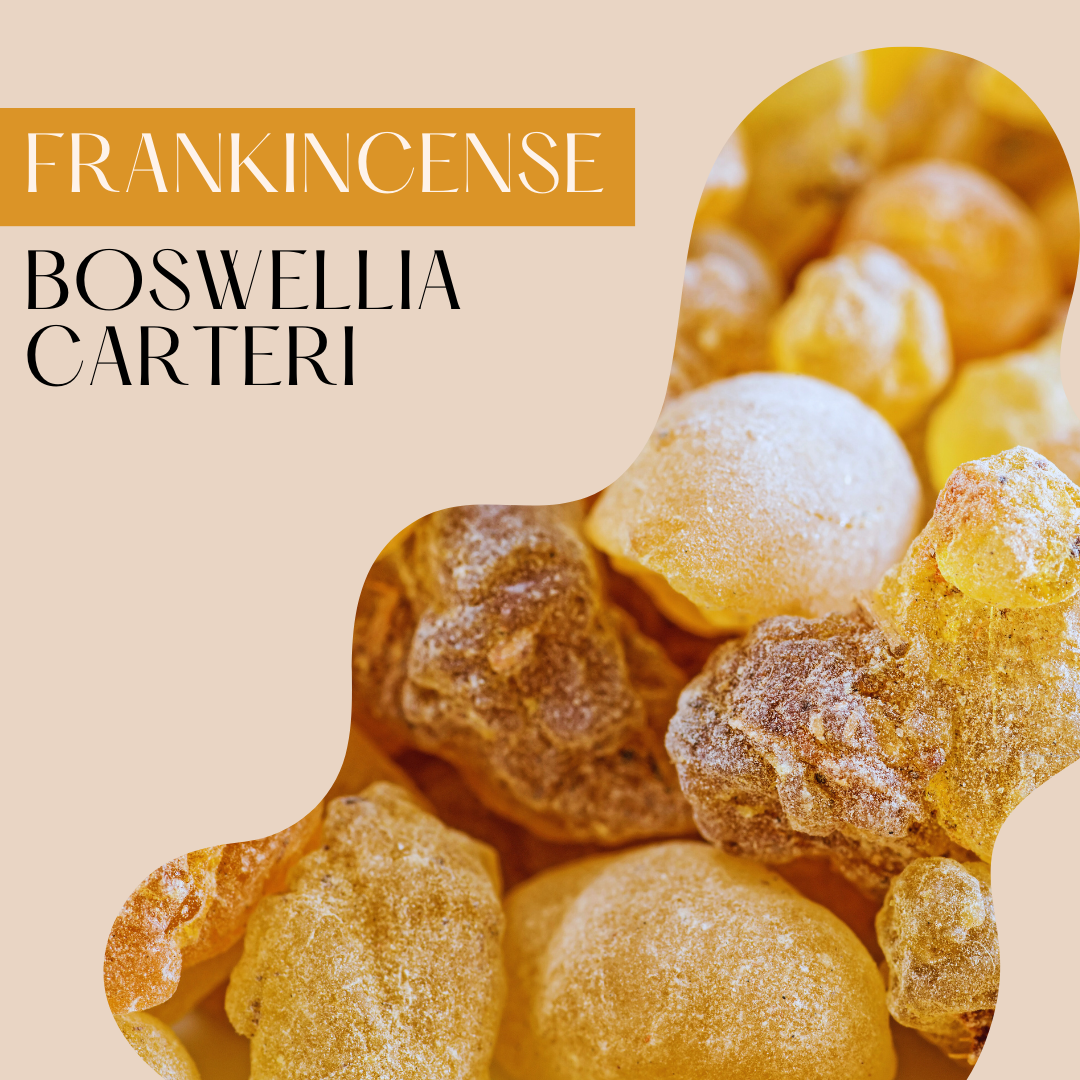
Botanical Name: Boswellia carterii
Botany and Origins: Frankincense also known as olibanum, is a natural oleo-gum-resin formed from the physiological exudate from the bark of various Boswellia species. The most commonly used species are
- Boswellia carteri (from Somalia)
- Boswellia sacra (from Oman, Yemen)
- Boswellia serrata (from western India)
The trees originate from the mountainous areas of western India, southern Abrabia and north-eastern Africa. The trees are not cultivated, and the collection of the resin is made where the trees are most abundant. The major frankincense producing countries are Somalia and Ethiopia. The resin is collected by making incisions into the bark. A milk-white liquid appears which then solidifies into amber or orange-brown crystals of resin. The resin is sorted and graded. The age, appearance, moisture level and odour characteristics determine the quality of the oil.
Method of Extraction: Frankincense oil is produced from hydro-distillation of the resin.
Cultivation: Wild Harvested
Historical and Traditional Uses: The name olibanum is thought to be derived from Latin, olium libanum, meaning oil from Lebanon. The name frankincense is derived from the Old French word franc, meaning free, pure or abundant, and Latin incensum, meaning to smoke. Frankincense played a very important role in the religious and domestic lives of Ancient Egypt, Persian, Hebrew, Greek and Roman civilisations. It has always been considered an important ingredient in cosmetics, as an aromatic incense and in religious rituals of these ancient civilisations. The Egyptians obtained frankincense from the land of Punt, believed to have been a region in Somalia. The famous kyphi, a renowned scent used by them, was made with frankincense. Kyphi was used as an incense and also added to beverages. Kohl, a black powder used by Egyptian women to paint their eyelids, is made from charred frankincense.
The Babylonians used large amounts of frankincense during their religious rites. Roman emperor Nero is said to have burnt more frankincense than Arabia could produce in a year at his wife Poppaea's funeral. Frankincense is regularly mentioned in the Bible, being used in religious ceremonies. The most famous reference to frankincense was in the bible when it was given as gift to the infant Jesus. Frankincense was recommended as an antidote to hemlock, for tumours, ulcers, vomiting, dysentery and fever.
Frankincense continues to be used in many Christian churches nowadays. It is still used in many parts of the Arab world. They believe that the most useful scent for attracting angels and dispelling evil spirits is frankincense. hence, children, houses and mosques are censed weekly with frankincense.
Pharmacology and Clinical Studies: Studies performed on the components of Boswellia carterii shown that it exhibits anti-inflammatory, anti-tumour, and antioxidant activities, including some important organi-protective effects on the heart, liver, and kidney.
Indications:
- Nervous System: Frankincense can be used to alleviate anxiety, nervous tension and stress related conditions.
- Respiratory System: Frankincense has traditionally been used to treat respiratory conditions such as asthma, bronchitis, catarrhal conditions and asthmatic condition associated with nervousness.
- Skin Care: It is well known in skin care for its cicatrisant, cytophylactic and vulnerary properties and is recommended for dry and mature skin, scars, wounds and wrinkles.
Safety: Frankincense oil has been reported to be non-toxic, non-irritant and non-sensitising.
Country of Origin: Somalia
Size: 10ml, 30ml, 50ml (for 100ml and above, please contact us)
Share
Additional Information
Collapsible content
How to use
Diffuse & Inhale
Add 3–6 drops to a diffuser with water.
Breathe in directly from a tissue or personal inhaler for an instant lift.
Apply to Skin
Always dilute: 1–2 drops per teaspoon of carrier oil.
Use for massage, spot treatment, or in your bath.
Safety Tips
Patch test before use.
Avoid eyes and sensitive areas.
Keep away from children and pets.
Store in a cool, dark place.
Ingredients
Boswellia carterii